
DETROIT — U.S. President Donald Trump on Saturday announced additional 10% tariffs on Chinese imports, affecting a small number of U.S. cars. But the tariffs also affect auto parts, which could make already high car prices even higher for consumers.
In recent years, the U.S. has imported about $15.4 billion to $17.5 billion worth of transportation products from China each year, including $9 billion to $10 billion a year in parts and accessories for cars, tractors and other specialty vehicles, according to the U.S. International Trade Commission.
The biggest impact on cars will be Ford Motor’s Lincoln Nautilus and General Motors’ Buick Envision. Last year, 88,515 Chinese-made cars were sold in the U.S., of which 83,884, or 95%, were crossovers.
“The biggest hits have been primarily GM and Ford in terms of sales,” said Jeff Schuster, vice president of automotive research at GlobalData. “Our domestic companies have taken the brunt of the impact, at least in terms of vehicle sales… but the impact can be mitigated to some extent.”
Other automakers, such as Volvo, owned by China’s Geely, and its electric vehicle subsidiary Polestar, import far fewer vehicles into the U.S. They have also shifted production plans to reduce the number of vehicles they import from China. This is especially true for electric vehicles, given that the Biden administration imposed a 100% tariff on electric vehicles from China last year.
New Ford Chief Financial Officer Shirley House said Wednesday that the automaker will “evaluate” the situation with tariffs on Chinese products, “including China’s response, and assess whether it affects” the company’s import and export strategy.
Spokesmen for Ford and GM declined to comment on possible changes in production or prices for their vehicles made in China. Volvo and Polestar have not yet responded to requests for comment.
According to GlobalData, consumer cars made in China will account for just 0.6% of new car sales in the U.S. (about 16 million) in 2024. That’s about the same number of cars imported from the U.K., Sweden and Slovakia.
Tariffs on Canada and Mexico, which accounted for 23.4% of U.S. car sales last year, will have a bigger impact on the U.S. auto market, GlobalData reported.
“While the number of cars imported from China is small, auto parts imports are worth about $15 billion to $20 billion per year, according to the U.S. International Trade Commission, and China is an important part of the battery/energy storage supply chain (especially LFP batteries for utility-scale energy storage),” Goldman Sachs analyst Mark Delaney said in an investment note on Sunday.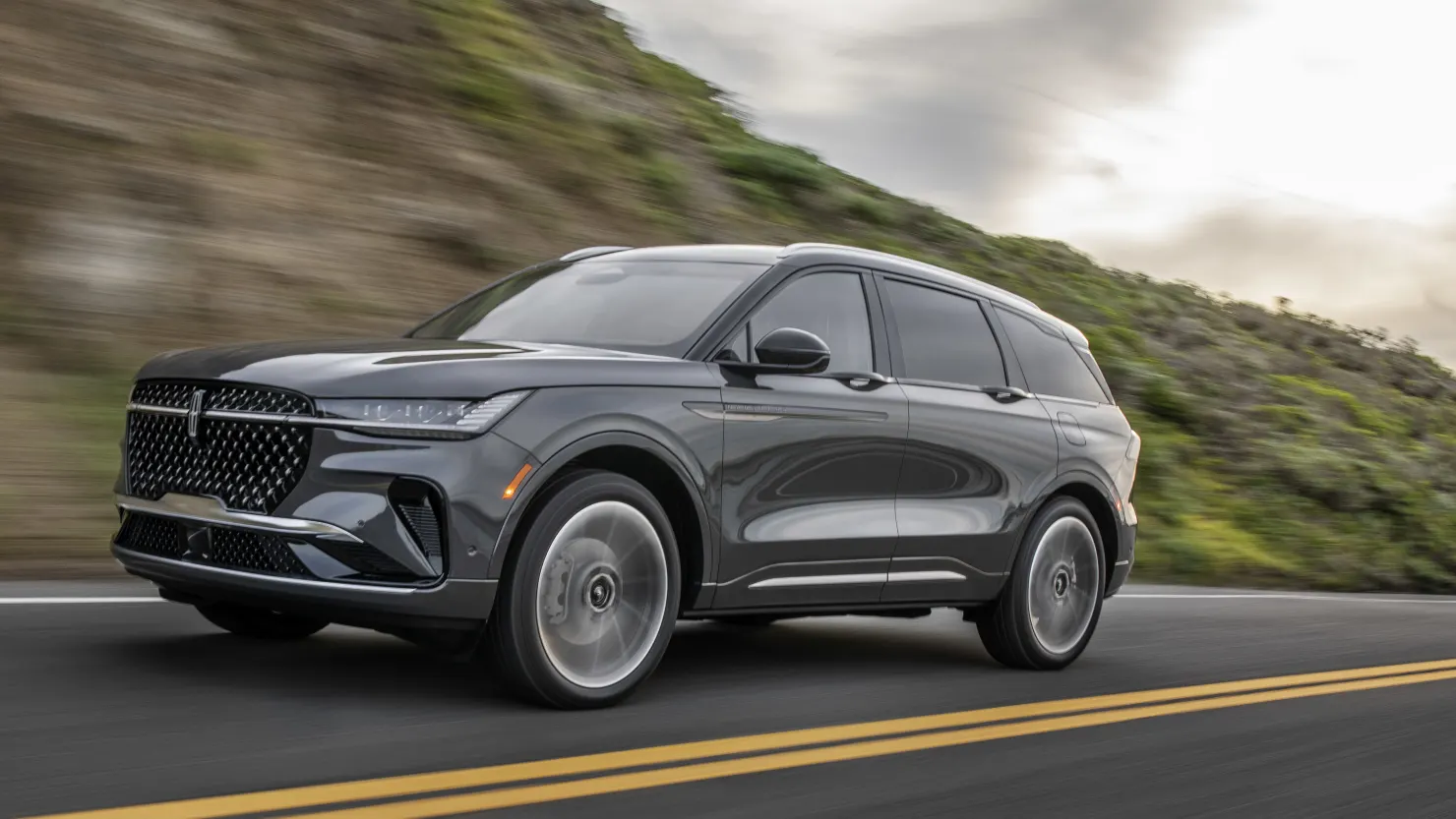
It’s unclear how much the tariffs will affect batteries or raw materials for electric vehicles, which have been slower to adopt than expected.
But many U.S. electric vehicles use a significant portion of parts from China, according to the National Highway Traffic Safety Administration. They include the Genesis G80 EV (25%); the Hyundai Kona EV (50%) and Hyundai Ioniq 5 N (30%); the Kia EV9 (35%) and Niro Electric (25%); the Nissan Ariya EV (40%); the Toyota bZ4x EV (20%) and RAV4 PHEV (20%); and the Volkswagen ID Buzz EV (25%).
The automotive association is “concerned” about tariffs in general, said Mike Jackson, executive director of original equipment supplier strategy and research at MEMA. He said that while an additional 10% tariff on China would not have as big an impact as the tariffs imposed on North America, it would increase costs.
“It’s a challenge. It means higher costs, and those costs have to be borne by us,” Jackson told CNBC in an interview on the sidelines of the Chicago Federal Reserve’s auto conference in Detroit on Wednesday. “Obviously, China continues to contribute very valuable content. They’ve optimized it in electronics and everything.”
Whether automakers decide to pass on the increased costs to consumers, change sourcing or take other actions remains to be seen.
Passing the costs on to consumers could spell trouble for sales. New car prices remain historically high at about $50,000, according to Cox Automotive.
“There’s no single item coming out of China that’s going to be impacted by this tariff that people are going to say, ‘Oh no, this thing is going to screw everything up’ … but they’re going to drive up costs,” said Stephanie Brinley, lead automotive analyst at S&P Global Mobility. “It goes to a broader issue, a broader pricing issue.”
Such price increases could hurt U.S. new-car sales, which S&P Global Mobility had forecast before the tariffs were imposed, Brinley said.
Related product recommendations:
GE FANUC DS200PLIBG2ACA
Bently Nevada TM10180-07-00-05-05-02
Emerson 7379A66G01
GE ENK32
Rockwell Automation 800R-2HXM7800R
ABB SDCS-POW-4 3ADT315100R1001
Bosch Rexroth MSK060B-0600-NN-S3-UG1-NNNN
Triconex A06B-0247-B400
ABB 3HNA006148-001
BIH2 BWU1840/BWU1416
BENTLY NEVADA 330103-00-04-10-02-00
ABB UNS2882A 3BHE003855R0001
GE FANUC IC695CPI310
MOXA MGate MB3170
ABB DSBC11057310256-E
Bently Nevada 330130-080-10-05
More……
Leave a comment
Your email address will not be published. Required fields are marked *