PLC Dragon Automation
All Categories
Call us 24/7+86 18030295882

ABB-backed start-up’s $6,600 robot designed to replace ‘tasks, not jobs’

Key Points

London-based Automata says its robot arm Eva is a more compact and affordable alternative to other machines in the market.

The firm is backed by Swiss engineering giant ABB, which recently contributed to a $7.4 million investment in the company.

Its founders were originally architects working for the company created by renowned Iraqi-British draftswoman Zaha Hadid.

Tucked away in a small converted warehouse in London is the office of Automata, a British start-up working on a machine it thinks might shake up the industrial robotics space.

Automata makes a tabletop robot arm called Eva. With a £4,990 ($6,600) price tag, the machine is designed to be a more compact and affordable alternative to the larger robots that help manufacture everything from cars to phones but typically cost tens of thousands of dollars.

That was one thing that led Swiss engineering giant ABB to invest in the company early on, co-founder Suryansh Chandra told CNBC in an interview. The firm contributed to Automata’s seed funding, and more recently backed a $7.4 million investment in the company.

“We were still a two-people company with a prototype we could carry around in our backpack, which was insane for ABB because their robots weigh 50 kilos,” Chandra said.

Stepping foot in Automata’s offices, a group of its machines can be seen perched around a table. They’re communicating with each other, picking up empty cans, using a camera to check whether they have the right lid — one lid has a black mark to show it’s faulty — and then sending them along a conveyor belt to decide which can passes and which fails.

The display is just one demonstration of Eva in action. Chandra shows a video of the robotic arm lifting a large metal sheet to take it from one spot in a factory to another. This is a job that was previously filled by a female worker in her 20s, fellow co-founder Mostafa ElSayed said.

That staffer hasn’t been made redundant, however. She now programs the robot herself, and “gets to think about how to roll it out in the rest of the factory,” ElSayed said.

The anecdote is part of a wider theme within the company, its founders say. Eva wasn’t designed to replace workers — a source of worry for many economists — but to fulfill some of the simpler tasks that could easily be done instead by a machine.

With robots being able to automate processes from moving around stock in warehouses to serving up coffee, experts are worried companies could take the route of laying off workers in droves to put robots in their place as a means of cutting costs.

Founders Chandra and ElSayed don’t subscribe to that philosophy. They say that businesses can’t grow by firing workers; rather, they should automate certain menial tasks so workers can make better use of their time. It’s about replacing “tasks, not jobs,” ElSayed says.

‘Held hostage’ to the gearbox

Both of Automata’s founders were originally architects working for Zaha Hadid Architects, the company created by renowned Iraqi-British draftswoman Zaha Hadid.

Hadid, who died in 2016, designed the aquatics center for the London 2012 Olympics and the Heydar Aliyev Center in Baku, Azerbaijan.

“If we can make buildings, how hard can robots be?” was the way the two thought about the project around the time they established their business in 2015, Chandra said.

But it wasn’t long before they ran into some difficulty. The gearbox — the set of gears more commonly associated with cars — was the company’s “first major technological challenge,” ElSayed said.

“There were moments where the survival of the company hinged on a test running on the gearbox,” he said, adding that many new companies operating in the robotics space are often “held hostage” to the mechanism.

He explained further that the device is made predominantly by two companies, and that his start-up didn’t want to become a “slave to their price point.” Automata’s gearing system was made “mostly from scratch” and costs less to make than to buy from another supplier, he added.

Simple to use

The firm touts its easy-to-use software, called Choreograph, as another selling point that differentiates Eva from other major industrial competitors.

Automata’s software lets a user program the mechanical arm to perform certain actions. Someone can, for instance, manually move it into different positions, logging each checkpoint with the press of a button, and then play out the chain of movements on a loop.

“We’re not inventing anything here, we’re just bringing consumer-level simplicity into industrial hardware,” Chandra said, while demonstrating the software.

“What we’re doing is making automation accessible by making robots that can be set up within a few minutes and cost a fraction of the other industrial robots,” he added.

And industrial robotics is no small industry. According to the International Federation of Robotics, 387,000 robots were shipped globally in 2017 — up 30 percent from the previous year — with sales hitting a record $16.2 billion.
Related product recommendations:
3BHB004661R0001
KUC711AE 3BHB004661R0001
3BSE018135R1
CI858K01  3BSE018135R1
500BIO01
500BIO01 1MRB150005R0001
500BIO01 1MRB200060
1MRB150005R0001
1MRB200060/E 
500BIO01 1MRB150005R0001
1MRB150005R1/J
500BIO01 1MRB150005R1/J
500PSM03
500PSM03  1MRB150038R1
1MRB150038R1
500PSM03 1MRB150038R1
more……

Honeywell Safety Manager Release 162

About this Guide

The Hardware Reference is intended primarily for the people responsible for and performing tasks related to Safety Manager.

This guide describes the functions of the Safety Builder tool and contains instructions how to use these functions.

Hardware Reference

The Hardware Reference is intended primarily for the people responsible for and performing tasks related to Safety Manager.

This guide provides technical information and specifications for all hardware components used in conjunction with Honeywell SMS’s Safety Manager.

Typical readers are hardware engineers, maintenance engineers and assembly personnel.

It is assumed that the reader masters the required skills and knowledge as described herein.

Note:

This guide does not contain information related to other Honeywell Experion™ PKS systems and thirdparty controllers such as Allen-Bradley, Series 9000, TDC 3000, Data Hiway, UDC, PlantScape, and so on.

For more information about these systems, see the manufacturers book set.

Content of Hardware Reference

The Hardware Reference is a reference guide providing detailed information regarding technical information and specifications for all hardware components used in conjunction with Honeywell SMS’s Safety Manager.

A reference guide is a Safety Manager related guide and does not describe tasks in terms of how to perform the task in terms of steps to follow. A reference guide can provide input to support decisions required to achieve a certain objective.

References

The following guides may use this reference guide as a reference source:

The Overview Guide :This guide describes the general knowledge required, the basic functions of, and the tasks related to Safety Manager.

The Safety Manual: This guide describes the specifications, design guidelines, and safety aspects related to Safety Manager

The Planning and Design Guide :This guide describes the tasks related to planning and designing a Safety Manager project.

The Troubleshooting and Maintenance Guide :This guide describes the tasks related to troubleshooting and maintaining Safety Manager.

The System Administration Guide :This guide describes the task related to administrating the computer systems used in a Safety Manager project.

Basic skills and knowledge

Before performing tasks related to Safety Manager you need to:

Understand basic Safety Manager concepts as explained in the Overview Guide and the Glossary.

Have a thorough understanding of the Safety Manual.

Have had appropriate training related to Safety Manager that certifies you for your tasks (see the Planning and Design Guide).

More related information can be found in Prerequisite skills and Training.

Prerequisite skills

When you perform tasks related to Safety Manager, it is assumed that you have appropriate knowledge of:

Site procedures

The hardware and software you are working with. These may i.e. be: computers, printers, network components, Controller and Station software.

Microsoft Windows operating systems.

Programmable logic controllers (PLCs).

Applicable safety standards for Process & Equipment Under Control.

Application design conform IEC 61131-3.

The IEC 61508 and IEC 61511 standards.

This guide assumes that you have a basic familiarity with the process(es) connected to the equipment under control and that you have a complete understanding of the hazard and risk analysis.

Training

Most of the skills mentioned above can be achieved by appropriate training. For more information, contact your Honeywell SMS representative or see:

Safety standards for Process & Equipment Under Control (PUC, EUC)

Safety Manager is the logic solver of a Safety Instrumented System (SIS) performing specific Safety Instrumented Functions (SIF) to ensure that risks are kept at predefined levels.

A SIS measures, independently from the Basic Process Control System (BPCS), a couple of relevant process signals like temperature, pressure, level in a tank or the flow through a pipe. The values of these signals are compared with the predefined safe values and, if needed, the SIS gives an alarm or takes action. In such cases the SIS controls the safety of the process and lowers the chance of an unsafe situation.

The logic in Safety Manager defines the response to process parameters.

In this context the following terms are explained in this section:

Safety Integrity Level (SIL)

Safety layers of protection

Equipment Under Control (EUC)

Process Under Control (PUC)

Safety Integrity Level (SIL)

The IEC 61508 standard specifies 4 levels of safety performance for safety functions. These are called safety integrity levels. Safety integrity level 1 (SIL1) is the lowest level of safety integrity, and safety integrity level 4 (SIL4) the highest level. If the level is below SIL1, the IEC 61508 and IEC 61511 do not apply.

Safety Manager can be used for processing multiple SIFs simultaneously demanding a SIL1 up to and including SIL3.

To achieve the required safety integrity level for the E/E/PE safety-related systems, an overall safety life cycle is adopted as the technical framework (as defined in IEC 61508).

For more information see also:

Safety layers of protection

Equipment Under Control (EUC)

Process Under Control (PUC)

Safety layers of protection

The figure on the next page shows the typical risk reduction methods or safety protection layers used in modern process plants.

Safety Instrumented Systems (SIS) are designed to operate in the prevention and mitigation layers to:

Prevent a process from entering a dangerous state.

Mitigate the consequences of entering a dangerous state

Safety Integrity Level (SIL)

Equipment Under Control (EUC)

Safety-related systems, such as Safety Manager, are designed to prevent the EUC from entering a dangerous state and to mitigate any EUC that has gone into a dangerous state.

For these functions a safety related system can be split in:

Emergency shutdown systems, operating in the prevention layer of “The concept of layers of protection” on the previous page.

Fire and gas detection and control systems, operating in the mitigation layer of “The concept of layers of protection” on the previous page.

For more information see also:

Safety Integrity Level (SIL)

Safety layers of protection

Process Under Control (PUC)
Related product recommendations:
ABB NDBU95
Rexroth MDD071C-N-030-N2T-095GA2
Schneider Automation 171CCC76010 M1/M1E
Bosch Rexroth R911285980
ELAU ISH070/60011/0/0/00/0/10/10/00
Bently Nevada 330505-01-02-02-00
Emerson IC697MDL653RR
ABB 3BSE008508R1 DI810
TRICONEX A02B-0267-B501
Mitsubishi 500A
EPRO MMS3120/022-000 9100-03047-01
BENTLY 330709-000-050-50-02-00
GE IC697PWR711
Bently Nevada 330102-00-27-10-02-05
GE SDN5-24-100CX-EPM
PRO-FACE  GP570-BG11-24V
More…

Environmental Specifications-3401

Designed for critical applications, the Trident performs predictably in a hostile industrial environment. The specifications listed on the table to the right confirm this built-in reliability. However, due to the number of diverse items that make up a Trident system, not all of the listed specifications apply to every item. Please contact Triconex to obtain the specifications for particular items.

Dimensions and Clearances

The dimensions given on the figure to the right are predicated on the vertical mounting of Trident baseplates on a panel.

The dimensions include the following:

• The MP Baseplate, AI HART Baseplates, and AO HART Baseplates are 9 inches (229 millimeters) wide by 9.79 inches (249 millimeters) long

• I/O Baseplates for all types of I/O modules are 7.0 inches (178 millimeters) wide by 9.79 inches (249 millimeters) long

All Trident I/O modules have the same dimensions, which are:

• Height = 8.65 inches (220 mm)

• Width = 1.75 inches (44 mm)

• Depth = 6.65 inches (169 mm)

Clearance should always allow adequate air flow around Trident modules. For typical applications, there should be at least 5 inches (15 centimeters) of clearance between active modules and the walls of the enclosure.

The DIN rails and baseplate assemblies should be arranged on the panel to allow for the installation of wiring channels (such as Panduit) along the left side of vertical columns.

Main Processor Module

Every Trident system is controlled by three Main Processor (MP) Modules that reside on a single baseplate. Each MP Module acts as one channel of the triplicated Trident system and provides the following features:

• An RS-232 or RS-485 Modbus port for direct TMR connection to a DCS (or other external host) without the need for any other modules

• A 10BaseT Ethernet (IEEE 802.3) port for connection to the TriStation 1131 programming workstation

• A lock lever that indicates whether the module is properly locked on the baseplate

Product Specifications

Alarm Indicators

The Trident fault-monitoring circuitry is able to detect and signal an alarm for all single faults and most multiple faults. The following alarm indicators are on the front panel of each MP:

• The Field Power alarm indicates loss of field power or faulty field power supply

• The Logic Power alarm indicates a missing or faulty system power supply

• The System Alarm indicates problems with the application or system integrity

• The Program Alarm indicates problems that are defined by the user-written application

• The Over Temperature alarm indicates when the module is over 183° F (84° C)

System Status Indicators

The system status indicators identify the processing state of the module. The status indicators include the following:

• The Pass indicator identifies when the module is operating normally.

• The Active indicator blinks once per scan when executing an application.

• The Fault indicator identifies when the processor has an internal fault.

Other Indicators

Other indicators on the MP include the following:

• Mode indicators (Remote, Run, Program, and Halt) identify the operating state of the entire Trident system.

• Communication indicators that identify the type of communication occurring

Physical Description

Each MP provides 16 megabytes of DRAM for the user-written application, sequence-of-events (SOE) and I/O data, diagnostics, and communication buffers.

The three MPs compare their respective data during every scan using the TriBus, a high-speed, fault-tolerant inter-processor bus. The MPs commu nicate with the I/O modules over a TMR HDLC I/O bus that operates at 2 megabits per second.

In addition to the TriStation and Modbus ports and alarm connectors, the MP Baseplate provides redundant, 24-volt fused logic power connectors. Logic power supplied here can operate the MPs and carry to the I/O Baseplates as well, so that no other logic power supplies are needed for the column.
Related product recommendations:
GE-VME-7807RC-41000
NORGREN 2636000-0246
A-B 800F-1YML122mm
Woodward 8271-756
SABO MPB.533.00
Allen-Bradley 2090-CPWM7DF-08AA04MP
SIEMENS 7MH4 601-1AA01
ICS TRIPLEX 9802/9852
Rockwell Automation HPK-E1307C-MA42A 
ABB UN0820B-P HIER460385-R1
Siemens 6GT2002-0GA10
Omron CJ1W-NC413
Schneider NWBP85002
Rockwell Automation TA747IEC
KUKA 1FT3101N AC
HARTING Module Frame – 09140240303
More…

The US abuses tariffs to disrupt the situation, while China “escorts” the world economy

Under the impact of the so-called “reciprocal tariff” policy of the United States, the American people have been hoarding storable goods to resist the cost of living pressure brought by rising prices; consumers in countries such as Canada and Denmark have expressed their strong dissatisfaction with the policy by boycotting American products.

“Instead of ‘making America great again’, the (US) president has made Washington an ‘international outcast’… The shadow of economic recession is gradually approaching the United States.” The British “Guardian” wrote. Adam Posen, director of the Peterson Institute for International Economics, a US think tank, published an article in “Trade Wars Can Fail Easily” in the magazine “Foreign Affairs” emphasizing that “the United States is betting all its bets on a losing hand.”

Recently, Chen Zheng, a lecturer at the Institute of Regional and Global Governance of Beijing Foreign Studies University and a researcher at Taihe Think Tank, said in an interview with China Youth Daily and China Youth Network that the Trump administration’s move not only failed to solve the domestic economic problems of the United States, but also intensified the problem of political polarization in the United States and seriously disrupted the world economic order. At the same time, China has always been an advocate of economic globalization and trade liberalization, a staunch defender and supporter of the World Trade Organization, and has contributed Chinese wisdom and strength to the stability and development of the global economy.

On April 13, at the Shanghai Haitong International Automobile Terminal, a large number of domestically produced new energy vehicles were waiting to be shipped for export. Image source: Visual China

Imposing tariffs is a move to “cut off the supply chain”

According to the US financial media CNBC, on April 14, the Organization of Petroleum Exporting Countries (OPEC) lowered its forecast for global oil demand growth in 2025 for the first time since December 2024. The reason is that a series of tariff policies announced by the United States have brought risks to the global economy.

Since taking office in January, Trump has wielded the “tariff stick”. He regards tariffs as “the most beautiful word in the dictionary” and an important tool for achieving the “industrial return and manufacturing recovery” in the United States. But when he was immersed in the fantasy of “prying the global industrial chain towards the United States” with tariffs, reality gave him a heavy blow.

“Trump is implementing a typical ‘shock therapy’. Not only will this measure fail to achieve its goals, it will also accelerate the bleeding of the US economy and trigger a domestic crisis,” Chen Zheng analyzed.

Specifically, on the one hand, US inflation will intensify, and a large number of US companies that rely on imports may go bankrupt, leading to an unemployment crisis; on the other hand, the US high-end manufacturing industry will be the first to be hit. Take industries such as semiconductors, aerospace, and new energy vehicles (such as Tesla) as examples. They rely heavily on the global supply chain. However, the US labor cost is high, and it lacks a complete industrial ecosystem like China, so it is extremely difficult to rebuild the upstream and downstream supply chain of the industry. “The policy of imposing tariffs is undoubtedly to cut off the supply chain.”

The US “Dialogue” News Network emphasized that even if tariffs force some manufacturing industries to move to the United States, it is very likely to backfire. For example, more domestic steel production in the United States can indeed create jobs for American workers, but high costs will inevitably lead to rising product prices, and the competitiveness of American products and consumers will be harmed.

Chen Zheng said that compared with the US tariff policy in the past, the characteristics of the current Trump administration’s tariff policy are: the amount of tariffs is huge and the radiation is wider, covering almost all countries with a trade surplus with the United States. Moreover, the current debt pressure faced by the United States is even greater, so Trump is eager to take action, through the means of trade war, trying to force countries to buy U.S. debt to help the United States alleviate its debt problem.

“Trump ignores the United States’ dominant position in the field of service trade.” Chen Zheng observed that the United States is a country with a surplus in service trade. Software provided by high-tech companies such as Microsoft and Google, financial services of financial companies, and virtual economic services provided by AI computing companies have all generated considerable revenue for the United States. In 2024 alone, the U.S. service trade surplus reached US$295 billion, far higher than the US$77 billion in 2000.

“Once you have bad intentions, it’s hard to sell things.” David Weinstein, professor of economics at Columbia University, expressed his concerns to the Wall Street Journal that tariff policies would undermine the United States’ ability to do business in other countries.

Filippo Taddei, managing director of global investment research at Goldman Sachs, revealed that the EU may target the service import sector of the United States and take countermeasures. The Wall Street Journal reported that the EU has proposed sanctions on large American technology companies. In addition, Trump’s approach has also aroused “anti-American sentiment” among foreign consumers, who tend to avoid American banks, asset management companies and other companies.

“In the long run, the policies implemented by the United States will eventually undermine its national soft power, dampen its advantage in attracting outstanding global talents, and cause heavy damage to its service industry.” Chen Zheng emphasized.

Weakened trust in the American system

“The chaotic tariff policy has weakened people’s confidence in the American system.” The New York Times wrote. But Trump did not stop.

Talking about the reasons why the Trump administration is so stubborn, Chen Zheng analyzed that from an ideological perspective, the “MAGA” group represented by Trump is a combination of populism and the extreme right. At present, the strength of the United States is relatively declining. Economic structural problems have led to an increase in the polarization between the rich and the poor. The people’s sense of deprivation has become stronger, and the trend of turning to the right is obvious. After Trump came to power, in order to give back to his “basic base”, he took advantage of the situation to launch populist propositions and respond to the demands of the grassroots people.

From a political perspective, the polarization of American society and politics is becoming increasingly obvious. Some working-class groups feel that they have been betrayed by the Democratic Party, the establishment and Wall Street elites. They blame many social problems on immigrants and foreign competitors, and Trump took advantage of their psychology.

“But the US government made decisions too hastily. It neither left itself time to adjust the supply chain nor was it really prepared to lose China.” Chen Zheng said. Adam Posen, director of the Peterson Institute for International Economics, further explained that China occupies a dominant position in the trade war launched by the United States. The important goods that the United States obtains from China cannot be replaced in the short term, nor can they be manufactured at low cost domestically.

In fact, the US financial market is suffering from turmoil, and the gap between the rich and the poor in society is further widening. The Guardian reported that the US stock market volatility and the increase in government debt costs have shaken the foundation of financial market stability, frustrated investor confidence, and may also damage the credit of the US dollar.

When talking with European scholars, Chen Zheng observed that the US dollar is equivalent to “US oil”. However, the foundation of the US dollar is US debt. If US debt is hit, the US dollar will lose its credit. At present, the US financial derivatives market is huge, and once problems arise, it will trigger systemic risks.

US President Trump and his staff have tried their best to convince the American people and the international community that the turmoil caused by his tariff increase is a deliberate “pain” rather than a reckless act. However, many governments and media pointed out that the huge uncertainty brought about by the US tariff policy not only disrupted global trade, but also backfired on the United States itself.

Today, the American people are shrouded in the negative haze caused by the tariff policy. According to the US Foreign Policy magazine, within 10 weeks after Trump took office, voters in Florida and Wisconsin saw a sharp drop in support for the Republican government, and they asked Republican leaders to adjust their strategies as soon as possible.

In fact, neither the Republicans nor the Democrats are in power to solve the structural problems in the US economy. Chen Zheng explained that there is a drawback in the US electoral system: politicians lack long-term strategic planning, and the public’s trust in the government is severely depleted, which leads to the US political ecology falling into a state of vacillation. On this basis, the tariff policy has intensified the contradictions between different political forces, aggravated social polarization, and provided greater development space for the extreme right.

In addition to the impact on the domestic political ecology of the United States, the trade frictions between the United States and its traditional allies continue to escalate, which is seriously endangering the stability of its alliance system.

The Financial Times analyzed that due to common interests and similar values, the United States has established long-term alliances with Japan, Germany, Australia, Canada and the United Kingdom. But Trump’s vigorously promoted “America First” policy has hit hard on traditional allies and close economic cooperation partners.

Chen Zheng analyzed that the trust mechanism of the transatlantic relationship between the United States and Europe will be shaken, and its economic and trade relations may be affected; cracks will appear in the alliance between the United States, Japan and South Korea; if the United States insists on imposing high tariffs on ASEAN countries, the ties that the United States has established with these countries in the past will also break.

“While Trump’s erratic policies hurt other countries, they also caused many troubles for the United States’ own economy, politics and diplomacy,” said Chen Zheng.

In response to Trump’s abuse of tariffs, Chinese Ambassador to Cuba Hua Xin posted a picture on a social platform: the price of the “MAGA” Little Red Hat produced in China has risen from $50 to $122.5. Image source: Social Platform X

The world should “seek win-win cooperation”

Former British Prime Minister Gordon Brown said, “No country is an island that can stand on its own.” In the context of globalization, international cooperation is the way out to deal with various challenges. Germany’s Der Spiegel published a commentary saying, “Trump launched a trade war against other parts of the world, redistributing the roles of (countries on) the global economic stage. China has become a reliable new partner.”

Chen Zheng said that the United States has ignored international economic and trade rules and vigorously promoted unilateralism. The “rules first” multilateral order led by the United States after World War II is under attack, and the World Trade Organization and the International Monetary Fund have been marginalized. If things go on like this, the United States will become a destroyer of the international economic order and be widely questioned by the international community.

“Americans expect China to greatly relax restrictions on U.S. investment and imports of U.S. goods…but Trump may have the opposite effect.” Der Spiegel wrote, “His trade war may make most of the world China’s allies.”

Singapore’s Lianhe Zaobao quoted experts as saying that as regional organizations strengthen economic and trade ties and countries other than China and the United States increase economic and trade exchanges, the future may form a process of “trade globalization with the United States taking a back seat” or “semi-globalization without the United States.” Stephen Roach, an economist at Yale University in the United States, believes that under the impact of Trump on the world, China has improved its image; the United States has become “the problem, not the solution.”

Facing the tariff threat created by the United States, Chen Zheng believes that China should continue to deepen the existing economic and trade cooperation mechanism and work with other countries to inject stability and certainty into the development of the world economy.

For example, as an active advocate and promoter of BRICS cooperation, China should continue to strengthen cooperation with BRICS countries. Second, the joint construction of the Belt and Road Initiative has entered a new stage of high-quality development. China can strengthen economic and trade cooperation with the co-construction countries to properly deal with the impact of protectionism and unilateralism. At the same time, China can strengthen dialogue with Europe, Japan, South Korea and ASEAN countries, strengthen coordination and cooperation in relevant mechanisms, and enhance connectivity and economic and trade exchanges.

Chen Zheng said that maintaining the multilateral trading system, maintaining the stability of the global industrial chain and supply chain, and maintaining an open and cooperative international environment are crucial to the development of the world economy. Today, China’s important concept of building a community with a shared future for mankind, as well as global development initiatives, global security initiatives, and global civilization initiatives, have made important contributions to the stability and development of the global economy and guided the direction for solving the common challenges faced by all countries.

“In a world of turmoil, countries should work together to strengthen the resilience of regional production and supply chain integration, promote the improvement of the global economic governance system, and seek win-win results through cooperation.” Chen Zheng emphasized.
Related product recommendations:
Bosch Rexroth MKE037B-144-AG0-AUNN
ZYGO ZMI-7705/8070-0902-01X
ABB DSAI146
ABB DSTD110
Siemens 6ES7 414-4HM14-0AB0
A-B 1756-A4LXT
Autonet HFRR01-PCB-V10 Rack:
ABB AB 2085-OW16 Micro800
ABB N-5630-2-H00AA 
Honeywell 51304362-350
A-B 800K-22FMW24X10E100
A-B SK-G1-FAN1-F9
B&R 5CAMPH0200-30
ABB 3BSE042237R2
Emerson IC200UAL005-24
A-B 48CR-ADJBKT
More…

Tariffs will drive up the cost of airplanes, the United States’ star export

Key Points

Tariffs would drive up costs of key aerospace parts, making it more expensive for Boeing and even foreign companies with U.S. factories to produce planes.

The tariffs are set to hit an aerospace supply chain still in recovery from the Covid-19 pandemic.

The duties would also upend nearly half a century of mostly duty-free aerospace trade.


The production line for the Boeing P-8 Poseidon maritime patrol aircraft is pictured at Boeing's 737 factory in Renton, Washington, November 18, 2021.
 

The production line for the Boeing P-8 Poseidon maritime patrol aircraft is pictured at Boeing’s 737 factory in Renton, Washington, November 18, 2021.

Jason Redmond | Reuters

President Donald Trump’s sweeping tariffs are set to drive up the cost of Boeing and Airbus planes, GE Aerospace engines, and hundreds of other aerospace and defense products, threatening an industry that helps soften the U.S. trade deficit by more than $100 billion a year.

“It certainly makes things more expensive for the industry,” Dak Hardwick, vice president of international affairs at the Aerospace Industries Association, which represents Boeing, GE Aerospace, Airbus and dozens of other aerospace and defense companies, said of the tariffs.

The industry group said it is asking the Trump administration to uphold provisions in a nearly half-century old trade agreement that allows for duty-free trade of civilian aircraft and imports tied to defense and national security.

“The line is certainly long” for requests to the White House, Hardwick said.

Read more CNBC airline news

United Airlines adds Thailand, Vietnam and Australia flights in latest expansion

Goodbye to ‘bags fly free’ on Southwest, the last free perk in America

First-class seats are getting so fancy they’re holding up new airplanes

U.S. consumers are starting to crack as tariffs add to inflation, recession concerns

Trump’s executive order announcing the tariffs said trade and economic policies around the world have exacerbated a decline in overall U.S. manufacturing.

Regarding innovation in the defense sector, the order stated, “If the United States wishes to maintain an effective security umbrella to defend its citizens and homeland, as well as for its allies and partners, it needs to have a large upstream manufacturing and goods-producing ecosystem to manufacture these products without undue reliance on imports for key inputs.”

The aerospace industry has long been a top exporter for the United States. At Boeing alone, more than two-thirds of its airplane orders over the past decade came from customers outside of the United States, according to company data.

“Free trade is very important to us,” Boeing CEO Kelly Ortberg said at a Senate hearing Wednesday. “We really are the ideal kind of an export company where we’re outselling internationally. It’s creating U.S. jobs, long-term high value U.S. jobs. So it’s important that we continue to have access to that market and that we don’t get in a situation where certain markets become closed to us.”


WASHINGTON, DC - APRIL 02: President and CEO of Boeing Kelly Ortberg testifies before the Senate Commerce, Science, and Transportation Committee in the Dirksen Senate Office Building on April 02, 2025 in Washington, DC. The committee held the hearing to discuss safety measures Boeing has taken following an incident last year where the door plug of a Boeing 737 MAX 9 detached mid-air. (Photo by Win McNamee/Getty Images)
 

President and CEO of Boeing Kelly Ortberg testifies before the Senate Commerce, Science, and Transportation Committee in the Dirksen Senate Office Building on April 02, 2025 in Washington, DC.

Win Mcnamee | Getty Images News | Getty Images

The industry has mostly bought and sold planes and parts without having to pay tariffs under a 45-year-old trade agreement, which would be derailed by Trump’s new tariffs. The president this week introduced levies of 10% on countries around the world, with higher duties on certain countries and regions, some of which like Europe, are key to the aerospace industry.

Imported steel and aluminum, other key materials in airplanes, are subject to separate sector-level duties that Trump announced earlier this year.

“President Trump has been clear: if you make your product in America, you won’t have to worry about tariffs,” White House spokesman Kush Desai said in an email.

Tariffs are paid by the importer, and the increased prices due to the levies would either have to be absorbed by the airplane or engine maker, by the still-fragile supply chain or by the end consumer, said Hardwick.

Jefferies analyst Sheila Kahyaoglu said in a note Thursday that a price jump on “any product within 12 months is eaten by the [original equipment manufacturer], assuming new inventory buy. Outside that time period, ultimately the buyer and hence consumer.”

Prices for planes are negotiated in advance, and airlines have to often wait years for aircraft, so material costs can shift dramatically over that period.

“This is not where you put money down for an automobile and it ends up in your driveway” in three months, Hardwick said.

Shares of Boeing, engine maker GE and airlines tumbled again Friday, adding to the market rout after Trump announced the tariffs Wednesday.

“This is the one manufacturing sector where America has, has enjoyed a tremendous trade surplus,” said Richard Aboulafia, managing director at AeroDynamic Advisory. “So the idea of fighting a trade war for this industry, it’s living in a crystal palace hurling giant boulders.”

Global supply chain

The tariffs are also a new strain on the aerospace industry, which still has a fragile supply chain in the wake of Covid, with some parts in short supply. Major supplies have tried to quickly hire workers and ramp up production during a post-pandemic travel boom.

But airplane makers still haven’t kept up with demand.


An Airbus SE A321 plane fuselage is lifted with a crane at the company's final assembly line facility in Mobile, Alabama
 

An Airbus SE A321 plane fuselage is lifted with a crane at the company’s final assembly line facility in Mobile, Alabama

Luke Sharrett | Bloomberg | Getty Images

Even a “Made in the USA” label for an airplane is a misnomer.

For example, the supply chain for a Boeing 787 Dreamliner, which is assembled in South Carolina, spans from Japan to Italy.

Its European rival, Airbus, has a Mobile, Alabama, factory but is still on the hook for tariffs for imported parts, from wings to fuselages.

“It doesn’t matter who owns the company. If an item crosses the border, it will have to be paid by importer of record,” Hardwick said.

Airbus has expanded the factory since the first Alabama-assembled Airbus A321, an aircraft for JetBlue Airways named “BluesMobile,” rolled out nine years ago. Its bet on increasing U.S. output of its jets, which are still largely made in Europe, also includes assembly of smaller A220s in Alabama, for customers that include JetBlue and Delta Air Lines.


American Airlines workers perform maintenance on CFM-56 engine in Tulsa, Oklahoma
 

American Airlines workers perform maintenance on CFM-56 engine in Tulsa, Oklahoma

Erin Black | CNBC

Meanwhile, continuing along the supply chain, General Electric and France’s Safran have a joint venture in which they make top-selling CFM engines, which power both Boeing and Airbus narrow-body jets. Each company manufactures certain portions of engines, which are sent to factories in Ohio, Indiana and North Carolina for GE and outside of Paris for Safran.

Thousands of imported replacement parts for engines and other aircraft parts, many of which come from abroad, could also become more expensive.

“There’s no such thing as a national jet,” Aboulafia said.
Related product recommendations:
Bosch Rexroth MKE037B-144-AG0-AUNN
ZYGO ZMI-7705/8070-0902-01X
ABB DSAI146
ABB DSTD110
Siemens 6ES7 414-4HM14-0AB0
A-B 1756-A4LX
Autonet HFRR01-PCB-V10
ABB AB 2085-OW16
ABB N-5630-2-H00AA
Honeywell 51304362-350
A-B 800K-22FMW24X10E100
A-B SK-G1-FAN1-F9
B&R 5CAMPH0200-30
ABB 3BSE042237R2
Emerson IC200UAL005-24
A-B 48CR-ADJBKT
More…

Canadians’ reduced travel to the U.S. could widen U.S. tourism deficit by $50 billion

Key Points

Travel from Canada to the U.S. is falling, which could widen the country’s $50 billion tourism deficit.

Canada is the largest source of international tourists to the U.S.

The White House said Friday that Canadians “will no longer have to endure the inconvenience of international travel” when Canada becomes our 51st state.

Several other countries have also issued travel warnings for travelers considering traveling to the U.S.

Canadians are cutting back on travel to the U.S., and visitors from other countries may soon follow, threatening to exacerbate the country’s $50 billion tourism deficit.

Experts say the reasons for their retreat are varied, including unfavorable currency exchange rates, the U.S. political climate (given President Trump’s trade policies and his public statements about annexing Canada), high-profile detentions of people who already hold U.S. visas, long visa wait times and other policies that have heightened tensions with a longtime close ally.

“Everyone wants to join President Trump’s America,” a White House spokesperson said via email on Friday.

“Canadians will no longer have to endure the inconvenience of international travel when Canada becomes our 51st state,” and “Europeans are eager to enjoy America’s golden age if they so choose,” the spokesperson said.

In response to President Trump’s tariff plan at the time, former Canadian Prime Minister Justin Trudeau urged Canadians last month to “Choose Canada” and suggested “changing your summer vacation plans and staying in Canada to explore the many national and provincial parks, historic sites and tourist destinations across our great country.”

Cross-border travel trends and the Trump administration’s policies have worried some in the U.S. travel industry, which attracts more than $1 trillion in direct spending each year.

In a statement to CNBC, the U.S. Travel Association said there are “issues with America’s welcome, a slowing U.S. economy, and recent security concerns.”

“These challenges are real and require decisive action,” the organization said. Its members include major hotel groups, airlines and other major travel companies. The organization also said it is “actively working with the White House and Congress to advance policies that drive economic expansion and keep the United States competitive on the global stage.” ”

This involves billions of dollars of investment. Americans’ spending on foreign travel has surpassed the amount of foreign tourists the U.S. attracts.

Last year, the U.S. had a tourism deficit of more than $51 billion, according to the Commerce Department, meaning Americans spent much more abroad than foreigners who visited the country, both of which still show a deficit after deducting spending for medical and educational purposes.

The U.S. attracted more than 72 million tourists last year, but that’s still below pre-pandemic levels, according to Jefferies’ report. Canadian tourists were the largest group, accounting for 28%, followed by Mexico at 23%, the bank said in a report this month.

Travel and tourism from inbound visitors are considered U.S. exports, accounting for about 8% of U.S. exports of goods and services, the U.S. Commerce Department said.

International visitors from overseas are particularly important because they tend to stay longer and spend more than local visitors, the U.S. Travel Association said.

Some Canadians go elsewhere

Both air travel and land border crossings between the U.S. and Canada have fallen.

The number of flights returning home for Canadians fell in February from the same period last year, according to Statistics Canada. 13%, while the number of people returning home by car fell 23%.

Hotel demand is also falling in parts of the Canada-U.S. border. Data from hotel data company STR showed that as of March 15, hotel demand in Bellingham, Washington, was down 8%, and in the Niagara Falls area was down 3.5%. However, the company said that hotel demand in Florida, a top destination for Canadian tourists, was up 3% from last year.

Canadian airlines are cutting some routes and flights to the U.S.

For example, Canadian airline Flair said it had canceled a route that was originally scheduled to fly from Toronto to Nashville, Tennessee.

“Our network decisions are driven entirely by consumer demand – we deploy aircraft where demand is strongest and provide the lowest fares to the most travelers,” a spokesperson for the airline said by email.

Canadian airline WestJet said it has seen Canadian passengers’ bookings shift away from the U.S. to other popular sun destinations such as Mexico and the Caribbean.

“Airlines remain focused on understanding where people want to go, and we will continue to fly where there is demand,” a spokesperson said.

Read more CNBC aviation news

Travel industry executives warn that weaker-than-expected domestic bookings mean more domestic travel may not make up for the drop in cross-border travel. Bank of America reported this week that overall household credit and debit card spending in the year ended March 22 was up 1.5% from a year ago, but air travel spending was down 7.2%.

United Airlines

For example, CEO Scott Kirby said at an investor conference earlier this month that the airline cut routes in part because “a lot of it is cross-border, and Canadian traffic to the U.S. has dropped significantly,” as well as a sharp drop in flights previously targeted for U.S. government-related travel.

Lara Harbachian, who works at a digital printing company in Montreal, and eight friends had (so far) been considering several places in the U.S. to celebrate their 40th birthdays this year: San Diego, Palm Springs, California, Savannah, Georgia, or Nashville. The winner was further east: Barcelona, Spain.

While flights to Europe are more expensive than to the U.S., Habachian said it would be cheaper for her and her friends to travel to popular cities in Spain, where they don’t need to rent a car and where high-end dining and hotels are cheaper, especially with the Canadian dollar weaker against the U.S. dollar.

“I can have a 15-euro meal in the U.S., but I can’t have a $15 meal,” she said.

Trump earlier this month formed a task force to oversee the 2026 FIFA World Cup, which the U.S. is co-hosting with Mexico and Canada, with the goal of “showcasing national pride and hospitality while promoting economic growth and tourism through sports.”

Increased travel warnings about the U.S.

Another challenge facing the U.S. tourism industry this year has been the increase in travel warnings about traveling to the U.S. Germany, the U.K., France, Denmark and Finland have all issued travel warnings to their citizens planning to travel to the U.S.

These incidents were sparked by the detention of individuals even with U.S. visas and Trump’s executive order mandating that the U.S. recognize only two biological sexes, which has raised concerns among European governments about travelers whose gender written on their passports is different from their birth sex.

Germany, for example, says that “travelers whose gender input is ‘X’ or whose current gender input is different from their date of birth should contact the responsible U.S. diplomatic mission in Germany prior to entry to learn about applicable entry requirements.”

Caroline Lusby, assistant professor of tourism at Florida International University’s Chaplin College of Hospitality and Tourism Management, said travel warnings “may deter international visitors, especially first-time travelers.”

She said there is often a backlash after an event or tragedy, such as after the 2015 Paris terrorist attacks. “But many times we know that once a destination’s image changes, it takes a lot of work to restore trust,” she said.

“In terms of economic consequences, this could result in billions of dollars in losses,” she added.
Related product recommendations:
DCC2382A 3EST125-975

PM865K01 3BSE031151R1
PM856AK01 3BSE066490R1
PPD115A02 3BHE017628R0002
PPD539A102 3BHE039770R0102
PPD517A3011 3BHE041576R3011
GFD563A101 3BHE046836R0101
GFD563A102 3BHE046836R0102
PCD530A102 3BHE041343R0102
PCD2000 8R37-2021-21-3101
PCD232A 3BHE022293R0101
PCD235A101 3BHE032025R0101 
PCD230A 3BHE022291R0101
PCD230A101 3BHE022291R0101
PCD231B 3HHE025541R0101
PCD231B101 3BHE025541R0101
PCD232A 3BHE022293R0101
PCD235B101 3BHE032025R0101
PCD235B1101 3BHE032025R1101
PCD235C101 3BHE057901R0101
PCD237A101 3BHE028915R0101
PCD244A101 3BHE042816R0101
PFCL201CE-150KN 3BSE006699D0005
More……

Main Processor Modules

A Tricon controller contains three Main Processor modules. Each Main Processor controls a separate channel of the system and operates in parallel with the other Main Processors. A dedicated I/O Processor on each Main Processor manages the data exchanged between the Main Processor and the I/O modules. A triplicated I/O bus, located on the chassis backplane, extends from chassis to chassis by means of I/O bus cables.

As each input module is polled, the appropriate channel of the I/O bus transmits new input data to the Main Processor. The input data is assembled into a table in the Main Processor and is stored in memory for use in the voting process.

The individual input table in each Main Processor is transferred to its neighboring Main Processors over the TriBus. During this transfer, voting takes place. The TriBus uses a direct memory access programmable device to synchronize and transmit data among the three Main Processors.

If a disagreement occurs, the signal value found in two out of three tables prevails, and the third table is corrected accordingly. One-time differences which result from sample timing variations are distinguished from a pattern of differing data. Each Main Processor maintains data about necessary corrections in local memory. The Tricon controller built-in fault analyzer routines flag any disparity in the data and use it at the end of the scan to determine whether a fault exists on a particular module.Triconex 3721 Analog Input Module, TMR Type, 0 to 5 VDC Differential

The Main Processors transmit the corrected data to the control program. The 32-bit main microprocessor executes the control program in parallel with the neighboring Main Processor modules.

The control program generates a table of output values which are based on the table of input values according to customer-defined rules built into the control program. The I/O Processor on each Main Processor manages the transmission of output data to the output modules by means of the I/O bus.

Using the table of output values, the I/O Processor generates output messages, each corresponding to an individual output module in the system. Each output message is transmitted to the appropriate channel of the corresponding output module over the I/O bus. For example, Main Processor A transmits the appropriate table to Channel A of each output module over I/O Bus A. The transmittal of output data has priority over the routine scanning of all I/O modules. The I/O Processor manages the data exchanged between the Main Processors and the communication modules using the communication bus which supports a broadcast mechanism.

Main Processors receive power from dual Power Modules and power rails in the Main Chassis. A failure on one Power Module or power rail does not affect the system performance.

Model 3009 Main Processors

Model 3009 has 256 MB DRAM (without battery backup) and 2 MB NVRAM (SRAM with battery backup).

Model 3008 Main Processors

Model 3008 has 16 megabytes DRAM (without battery backup) and 32 kilobytes SRAM (with battery backup).

Model 3006 and 3007 Main Processors

Models 3006 and 3007 can be used with Tricon v9.0 to v9.5.x systems. They have the same architecture and specifications, except for SRAM, which is 2 megabytes for the 3006 and 1 megabyte for the 3007.

Bus Systems and Power Distribution

This figure depicts the three triplicated bus systems which are etched on the Model 8110 Main chassis backplane: the TriBus, the I/O bus, and the communication bus.

This figure depicts the three triplicated bus systems which are etched on the Model 8120E Enhanced Performance Main chassis backplane: the TriBus, the I/O bus, and the communication bus.

TriBus Operation

The TriBus consists of three independent serial links which synchronizes the Main Processors at the beginning of a scan, and performs either of these functions:

Transfers I/O, diagnostic, and communication data.

Compares data and flags disagreements of output or memory data from the previous scan.

An important feature of Tricon controller architecture is the use of a single transmitter to send data to both the upstream and downstream Main Processors, which ensures the same data is received by the upstream processor and downstream processor.

I/O Bus Operation

Each I/O module transfers signals to or from the field through its associated field termination assembly. Two positions in the chassis tie together as one logical slot. Termination cables are tied to panel connectors at the top of the backplane. Each connection extends from the termination module to both active and hot-spare I/O modules, which means both the active module and the hot-spare module receive the same information from the field termination wiring.

The triplicated I/O bus transfers data between the I/O modules and the Main Processors at 375 kilobits per second. The I/O bus is carried along the bottom of the backplane. Each channel of the I/O bus runs between one Main Processor and the corresponding channels on the I/O module. The I/O bus extends between chassis using a set of three I/O bus cables.

Communication Bus Operation

The communication bus runs between the Main Processors and the communication modules at 2 megabits per second.

Power Distribution

Power for the chassis is distributed across two independent power rails and down the center of the backplane. Each module in the chassis draws power from both power rails through dual power regulators. There are four sets of power regulators on each input and output board: one set for each channel (A, B, and C) and one set for the status indicators.

Power Modules

Each Tricon controller chassis houses two Power Modules arranged in a dual-redundant configuration. Each module derives power from the backplane and has independent power regulators for each channel. Each can support the power requirements for all the modules in the chassis in which it resides, and each feeds a separate power rail on the chassis backplane. The Power Modules have built-in diagnostic circuitry which checks for out-of-range voltages and over-temperature conditions. A short on a channel disables the power regulator rather than affecting the power bus.
Same functional module:
TRICONEX   3504E
TRICONEX   3511
TRICONEX   3515
TRICONEX 3601E
TRICONEX 3604E
TRICONEX 3607E
TRICONEX   3623T
TRICONEX   3625
TRICONEX  3625A
TRICONEX   3625C1
TRICONEX   3625
TRICONEX 3636R
TRICONEX   3664
TRICONEX 3700A
TRICONEX 3703E
TRICONEX   3708E
TRICONEX   3708EN
TRICONEX   3721C
TRICONEX 3721
TRICONEX   3805E
TRICONEX   3806E
TRICONEX 3902AX
TRICONEX 4000056-002
TRICONEX 4000066-025
More…

Trump’s China tariff hike will hit Ford, GM and billions of dollars in auto parts

DETROIT — U.S. President Donald Trump on Saturday announced additional 10% tariffs on Chinese imports, affecting a small number of U.S. cars. But the tariffs also affect auto parts, which could make already high car prices even higher for consumers.

In recent years, the U.S. has imported about $15.4 billion to $17.5 billion worth of transportation products from China each year, including $9 billion to $10 billion a year in parts and accessories for cars, tractors and other specialty vehicles, according to the U.S. International Trade Commission.

The biggest impact on cars will be Ford Motor’s Lincoln Nautilus and General Motors’ Buick Envision. Last year, 88,515 Chinese-made cars were sold in the U.S., of which 83,884, or 95%, were crossovers.

“The biggest hits have been primarily GM and Ford in terms of sales,” said Jeff Schuster, vice president of automotive research at GlobalData. “Our domestic companies have taken the brunt of the impact, at least in terms of vehicle sales… but the impact can be mitigated to some extent.”

Other automakers, such as Volvo, owned by China’s Geely, and its electric vehicle subsidiary Polestar, import far fewer vehicles into the U.S. They have also shifted production plans to reduce the number of vehicles they import from China. This is especially true for electric vehicles, given that the Biden administration imposed a 100% tariff on electric vehicles from China last year.

New Ford Chief Financial Officer Shirley House said Wednesday that the automaker will “evaluate” the situation with tariffs on Chinese products, “including China’s response, and assess whether it affects” the company’s import and export strategy.

Spokesmen for Ford and GM declined to comment on possible changes in production or prices for their vehicles made in China. Volvo and Polestar have not yet responded to requests for comment.

According to GlobalData, consumer cars made in China will account for just 0.6% of new car sales in the U.S. (about 16 million) in 2024. That’s about the same number of cars imported from the U.K., Sweden and Slovakia.

Tariffs on Canada and Mexico, which accounted for 23.4% of U.S. car sales last year, will have a bigger impact on the U.S. auto market, GlobalData reported.

“While the number of cars imported from China is small, auto parts imports are worth about $15 billion to $20 billion per year, according to the U.S. International Trade Commission, and China is an important part of the battery/energy storage supply chain (especially LFP batteries for utility-scale energy storage),” Goldman Sachs analyst Mark Delaney said in an investment note on Sunday.

It’s unclear how much the tariffs will affect batteries or raw materials for electric vehicles, which have been slower to adopt than expected.

But many U.S. electric vehicles use a significant portion of parts from China, according to the National Highway Traffic Safety Administration. They include the Genesis G80 EV (25%); the Hyundai Kona EV (50%) and Hyundai Ioniq 5 N (30%); the Kia EV9 (35%) and Niro Electric (25%); the Nissan Ariya EV (40%); the Toyota bZ4x EV (20%) and RAV4 PHEV (20%); and the Volkswagen ID Buzz EV (25%).

The automotive association is “concerned” about tariffs in general, said Mike Jackson, executive director of original equipment supplier strategy and research at MEMA. He said that while an additional 10% tariff on China would not have as big an impact as the tariffs imposed on North America, it would increase costs.

“It’s a challenge. It means higher costs, and those costs have to be borne by us,” Jackson told CNBC in an interview on the sidelines of the Chicago Federal Reserve’s auto conference in Detroit on Wednesday. “Obviously, China continues to contribute very valuable content. They’ve optimized it in electronics and everything.”

Whether automakers decide to pass on the increased costs to consumers, change sourcing or take other actions remains to be seen.

Passing the costs on to consumers could spell trouble for sales. New car prices remain historically high at about $50,000, according to Cox Automotive.

“There’s no single item coming out of China that’s going to be impacted by this tariff that people are going to say, ‘Oh no, this thing is going to screw everything up’ … but they’re going to drive up costs,” said Stephanie Brinley, lead automotive analyst at S&P Global Mobility. “It goes to a broader issue, a broader pricing issue.”

Such price increases could hurt U.S. new-car sales, which S&P Global Mobility had forecast before the tariffs were imposed, Brinley said.
Related product recommendations:
GE FANUC DS200PLIBG2ACA
Bently Nevada TM10180-07-00-05-05-02
Emerson 7379A66G01
GE ENK32
Rockwell Automation 800R-2HXM7800R
ABB SDCS-POW-4 3ADT315100R1001
Bosch Rexroth MSK060B-0600-NN-S3-UG1-NNNN
Triconex A06B-0247-B400
ABB 3HNA006148-001
BIH2 BWU1840/BWU1416
BENTLY NEVADA 330103-00-04-10-02-00
ABB UNS2882A 3BHE003855R0001
GE FANUC IC695CPI310
MOXA MGate MB3170
ABB DSBC11057310256-E
Bently Nevada 330130-080-10-05
More……

The record-breaking box office performance of Nezha 2 may seem surprising. But it shouldn’t be.

BEIJING — For someone who lived in China before the pandemic, the success of the animated film “Nezha 2” was more of an industry milestone than a surprise.

In 2023, just as coronavirus restrictions were lifted, domestic animation was gaining momentum, with hits like “Chang’an,” which retells the life of the Chinese poet Li Bai from the perspective of his friends. As the only animated film in China’s top 10 films of the year, it took in about $250 million, according to Maoyan box office data.

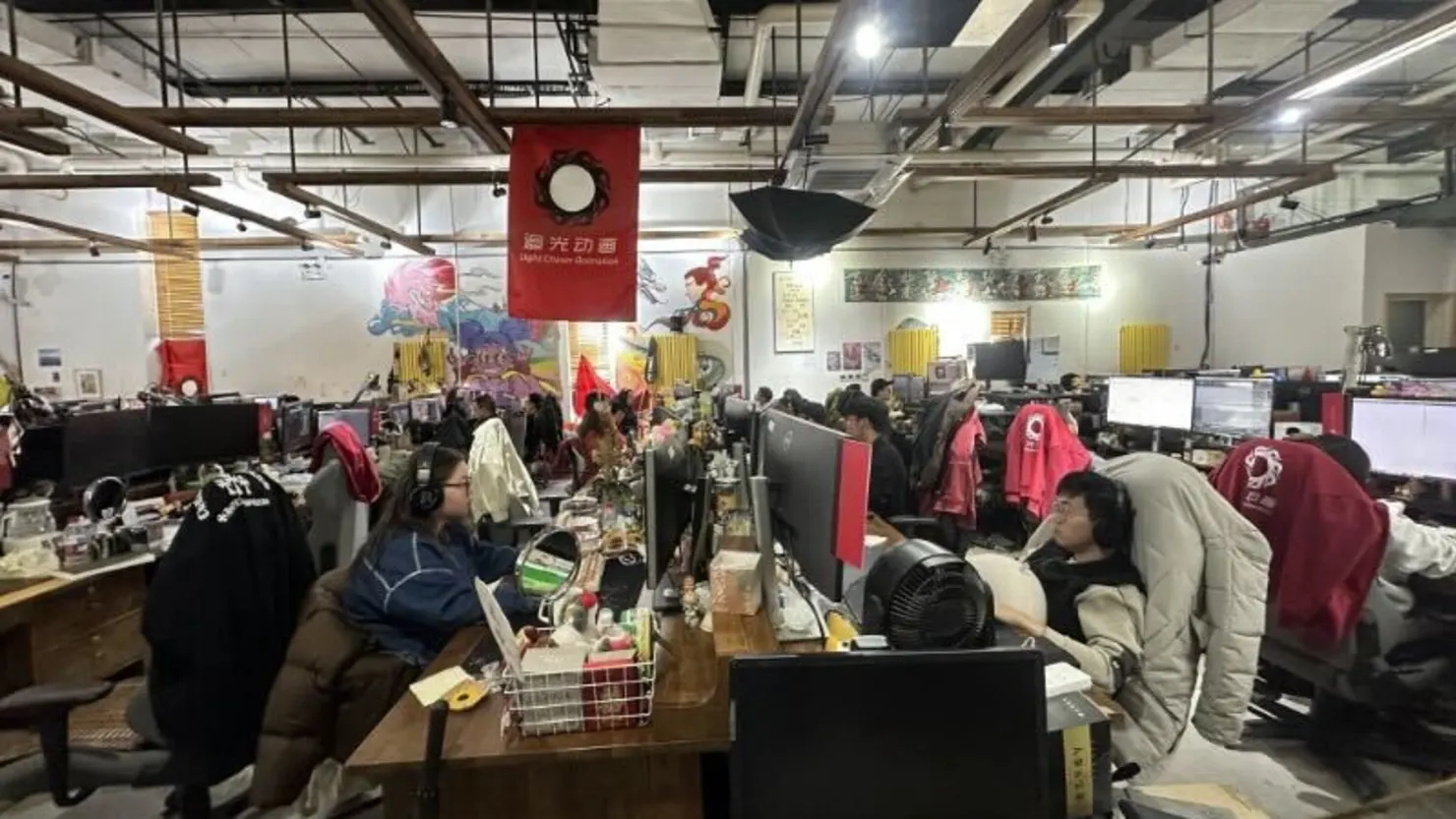
The production team behind “Chang’an,” Light Chaser Animation, works mostly out of an old white building on the outskirts of Beijing. The building has high ceilings, stairways that wind through the building, connecting multiple floors and rooms, and a gym.

When I visited this week, some animators worked on computers in the dark, racing against time to finish cinematic lighting effects for scenes in the film that will be released this summer. Others designed ancient Chinese robes, detailed eyebrows and reconstructed buildings.

“This place isn’t big enough anymore,” Yu Zhou, the studio’s president, said in Mandarin, which CNBC translated into English.

He said the 380-employee company needs to hire at least 100 more people next year to keep up with its new production schedule: releasing two films a year starting in 2026, compared with one a year currently. Artificial intelligence can only be a tool for now, he said. Light Chaser plans to move into its new office in the second half of this year.

The studio sticks to a three-year production plan for all the films it’s making. Yu said they try to imagine the future and whether 20 million to 30 million people will watch the film when it’s released. “Will this story be successful in three years?”

Yu said “Ghost Temple Strange Stories,” due to be released this summer, retells “Chinese ghost stories.” He said the studio is in talks with “mainstream Hollywood studios” about releasing the film in theaters overseas, including in North America, at the same time as it’s released in China.

Speaking about the studio’s appeal to global audiences, Yu said Light Chaser Animation’s Green Snake — a retelling of a Chinese legend partly set in a futuristic city — performed well on Netflix after its 2021 release, ranking in the top 10 non-English content for three weeks.

Among other animated titles in the works, video streaming company iQiyi is producing Mr. Zhong, which is expected to be released in China this year. The company’s senior vice president, Yaning, said Chinese animation has begun to break its “childish” image and is developing into an industry that is expanding into movie merchandise and games.

Recent history

Chinese animated films have only started to make a splash in the last decade.

“In the history of Chinese animation, there has never been a film like Big Fish and Begonia… This bold, thrilling fantasy adventure is unique in terms of Chinese animated films,” entertainment industry magazine Variety wrote after the film’s 2016 release.

The film was produced by Beijing Enlight Media. This year’s Ne Zha 2 is from the same producer as 2019’s Ne Zha 1 — which topped China’s box office that year.

Deep Sea, from Beijing studio OctMedia, won acclaim in early 2023 for its dreamy, pastel-hued depiction of a young girl’s journey to healing after being abandoned by her mother.

Liu Anxing, a manager at a cinema in Chengdu, told CNBC that while popularity doesn’t always translate into box office revenue, Ne Zha succeeded in part because it appealed to audiences of all ages. Liu said he’s proud of the achievements of China’s animation industry, but he doesn’t expect another blockbuster like Ne Zha to happen anytime soon — at least not until Ne Zha 3 is released in 2028.

Nezha 2 was released in China in late January as one of six films released over the week-long Lunar New Year holiday, which it accounted for half of the holiday box office, according to Maoyan. After its release in North America on February 14, Maoyan data showed that the film beat Pixar’s “Inside Out 2” to become the world’s highest-grossing animated film with box office revenue of more than 13 billion yuan (1.79 billion U.S. dollars).

Strategy and planning

Unlike Light Chaser Film and Television, which focuses on in-house production, the producers of “Nezha 2” rely on different studios. The director is from Chengdu’s Keke Cartoon, while Beijing’s Enlight Media is the main producer and distributor of the show. Chinese official media said that nearly 140 companies were involved in the production of the show.

State media also highlighted how government subsidies have helped support domestic animation from Chengdu to Qingdao. Beijing formulated a national plan in 2021 to “build China into a film power” by 2035, including a requirement to produce 50 films a year, each of which has box office revenue of at least 100 million yuan.

Jonathan Clements, author of “Animation: A History,” warned that the overproduction of films could bring unpleasant shocks to studios and investors. “Animation consumers themselves are a resource that needs to be carefully managed,” he said.

Clements added that unlike Disney blockbusters that have made more than $1 billion in multiple countries, Ne Zha 2 has done so largely because of sales in the Chinese market. “You don’t have to worry about whether your story, your characters or your attitudes will be shown in other countries.”

China’s plan also stipulates that domestic films account for no less than 55% of annual box office revenue.

After Hollywood movies were allowed into China, domestic audience interest gradually waned. Maoyan said Godzilla x Kong was the only movie to make the top 10 last year. Oppenheimer failed to make the top 20 Chinese box office in 2023, and Barbie lagged even further behind.

In 2019, Avengers: Endgame ranked third in the domestic box office rankings, behind Chinese sci-fi blockbuster The Wandering Earth and the first Ne Zha, according to Maoyan data.

Many Chinese animated TV series draw their characters and plots from stories created online by little-known authors. China Literature, the operator of a large user-generated content app, said 15 of the 20 most-watched web animation series in the first half of last year were adapted from content on its platform. In the past few years, the company has also begun putting adaptations on YouTube to expand its audience.

Chinese creators are also using generative AI for filmmaking. Short video streaming app Kuaishou is about to launch a seven-episode miniseries, “New World Installation,” which is mainly produced using the company’s Kling AI video generation technology. Director Chen Xiangyu said the team only needed to feed a simple script to the AI ​​model without drawing characters.
Related product recommendations:
Bently Nevada 3500/60 13381901
A-B 1326AB-B720E-21
BENTLY 3500/15 129478-01
BENTLY 3500/42-01-00 (176449-02 + 128229-01)
BENTLY 3500/33-01-00
Bently Nevada 3500/92 136180-01
Bently Nevada 3500/61-05-00
Bently 3500/32-01-02
Bently 3500/32M149986-02
Bently Nevada 3500/32M
Bently Nevada 3500/70 176449-09 
BENTLY 3500/53 133396-01
Bently Nevada 3500/25
Bently Nevada 3500/22M
Bently Nevada 3500/01-00-00
Bently Nevada 3500/45-02-00
Bently Nevada 3500/15 129486-01
Bently Nevada 3500/42-09-02
Bently Nevada 3500/94
ABB 81ET03 GJR2403500R3010
Bentley Nevada 3500/61E
Bently Nevada 3500/62
GE Bently Nevada 3500/50M, 286566-02
BENTLY 3500/05-01-02-00-00-00
Woodward EASYGEN 3500XT
More……

Pilz: Don’t underestimate the authorization key, it can also make a big difference!

The system of data management becomes particularly important.

PITreader Authorization Management System

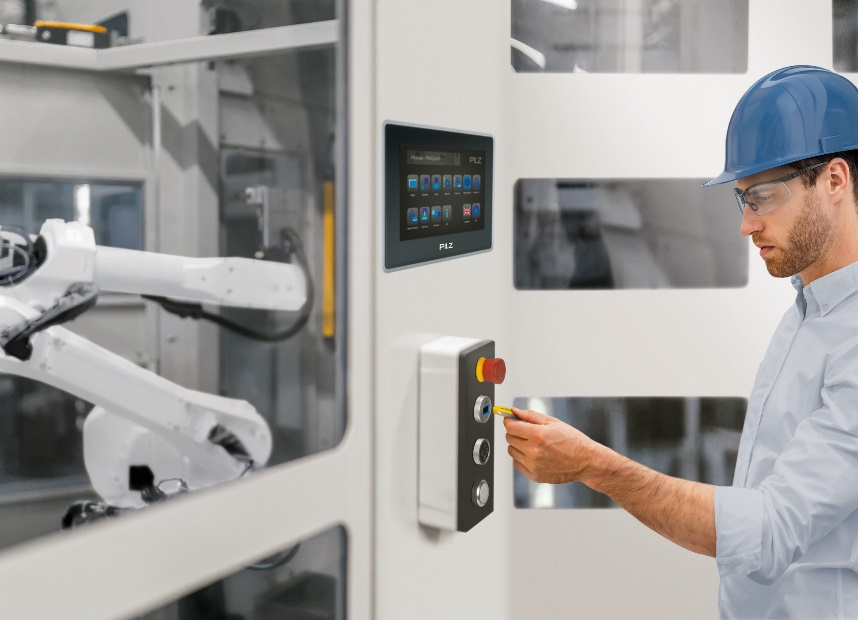
PILZ’s PITreader Authorization Management System is a comprehensive security access protection system that covers authority management, safety interlocking, protection locking and information display functions. The authorization management system can identify and judge the authority data written by the RFID electronic key, and complete the corresponding authorization management according to the authority data, thereby helping users complete tasks related to factory and machine access rights.

PITreader supports Modbus/TCP communication and REST API application interface. Each RFID key has its own “unique” security feature code. The authority keys are divided into pre-configured keys 1 to 5 and custom keys. The host computer can read the data to realize authority management, blacklist list, event tracing and other functions, effectively improving the management capabilities of production operations.

Diverse key selections

As a new RFID authorization management product in the I.A.M (Identification and Access Management) family, PITreader can support a variety of electronic keys, which can well meet the diverse needs of customers:

PITreader key—conventional PITreader key

PITreader sticker—small round sticker key in the picture below

PITreader card—card key in the picture below

Since firmware version 2.1, PITreader will support ISO 14443-A—contactless IC card standard. Through program writing, PITreader authorization management system can complete many different functions: such as: allowing access rights to enter, allowing human-machine interface operation, adding/reducing authorized personnel, key exchange system—preventing accidental start-up, and key exchange system—manual operation authority, etc.

Security & Safety’s “winged flying”

Nowadays, mechanical safety (Safety) has been deeply rooted in people’s hearts. With the further advancement of intelligent manufacturing, the importance of information security (Security) to production safety is self-evident. As a professional safety automation technology company, Pilz can provide a comprehensive solution covering information security and mechanical safety according to customer needs, ensuring the safety of personnel while ensuring the safety of equipment.

PITreader authorization management system supports the writing and granting of multiple permissions, and its comprehensive functions such as the collection of production line-related data are becoming more and more perfect, which can well meet the relevant safety and production needs of the factory.
Related product recommendations:
ABB PM861AK01
ABB PM825 3BSC970121R1
ABB PM858K02
ABB PM867K01 3BSE076355R1
ABB TPM810
ABB PM803F 3BDH000530R1
ABB PM856K01 3BSE018104R1
ABB PM851K01 3BSE018168R1
ABB PM825 3BSE010796R1
ABB PM891K02
ABB PM864AK02-EA
ABB PM861K01
ABB PM857K01, 3BSE088385R1
ABB PM803F 3BDH000530R1
GE IS220PPDAH1A REV E
ABB PPD512A10-150000
Honeywell PLC TC-PPD011
ABB PPD113B03-26-100110 3BHE023584R2634
PPD513AOC-100440  3BHE039724R0C3D
PPD517A3011  3BHE041576R3011
PPD517  3BHE041576R3011
PPD512A10-454000  3BHE040375R103E
3BHE057901R0101  PCD235
PCD235C101 3BHE057901R0101
GFD563A102 3BHE046836R0102
GFD563A101 3BHE046836R0101
GF D563  3BHE046836R010
GFD563A102  3BHE046836R0102
GE IS220PPDAH1A
ABB PPD113-B03-23-111615 
ABB PPD113B01-10-150000 3BHE023784R1023
ABB PPD512 3BHE040375R1023
Honeywell TK-PPD011 51309241-175
ABB PPD114B1022 – 3BHE020570R1022
ABB 3BHE020570R1022 – PPD114 B1022 AC 800
ABB 3BHE024820R0101 PPD234 A101
GE IS220PPDAH1A,REV C
GE IS220PPDAH1A REV D 
GE IS220PPDAH1A
ABB PPD113B03 3BHE023584R2365
More……

Search for products

Back to Top
Product has been added to your cart